





What seemed uncertain just months ago has become a powerful example of what collective advocacy can achieve. Thanks to the collective efforts of our partner Native Hawaiian organizations, such as Partners in Development, and the support of Hawaiʻi’s congressional delegation, including Senator Brian Schatz, Native Hawaiian education programs will receive much-needed federal funding for another year. INPEACE is honored to be one of several organizations receiving this support.
The following is an excerpt from the September 4, 2026 Star Advertiser article written by Victoria Budiono.
The U.S. Department of Education has awarded $29.7 million to Hawaii providers serving Native Hawaiian children and families, with the funds expected to be distributed by today, following an agreement to extend federal funding for the Native Hawaiian Education Program for another year.
The funding is part of a $46 million extension negotiated by U.S. Sen. Brian Schatz (D, Hawaii) and Education Secretary Linda McMahon. The remaining funds are expected to be released in the coming weeks.
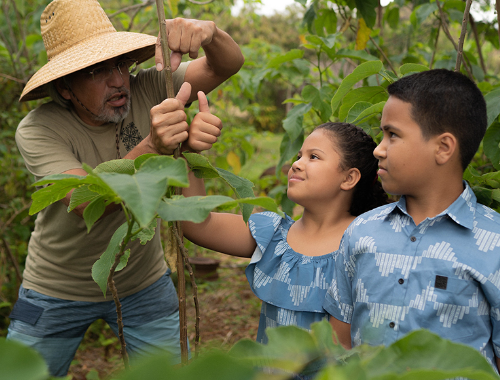
The Native Hawaiian Education Program supports more than 60 early childhood education sites statewide, as well as home-visiting services for children under 5, workforce development programs for parents and Hawaiian language immersion programs. The federally funded programs serve more than 3,000 Hawaii families.
At the Institute for Native Pacific Education and Culture, the uncertainty made it difficult to plan staffing, resources and future programming for its Keiki Steps program, CEO Sanoe Marfil said.
“It created anxiety for families who rely on Keiki Steps as a trusted source of early childhood education, parent engagement, culturally grounded learning experiences and family support,” Marfil said.
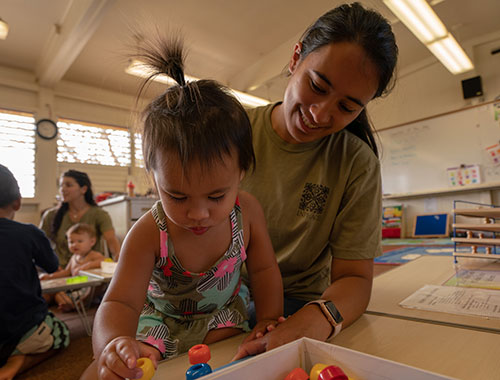
INPEACE’s Keiki Steps program served 240 children, 35 teachers and 199 families in 2025 through programming supported by the Native Hawaiian Education Program.
Marfil said losing the funding would have meant families losing access to free, culturally grounded early learning and parent education. Many families would have struggled to find comparable services because of limited availability, waitlists, transportation barriers and costs, she said.
“Few programs offer the same combination of early childhood education, parent education, and cultural connection,” Marfil said.
If NHEP funding had been cut, Marfil said many families would have lost access to essential early learning and family support services.
“Children would have missed opportunities to develop critical school-readiness skills, while parents would have lost access to educational resources, guidance, and support networks that help them become their child’s first and most important teacher,” she said. “The impact would have been especially significant for families already facing economic, geographic or educational barriers.”
Read More at https://www.staradvertiser.com/2026/09/04/hawaii-news/federal-native-hawaiian-education-funding-awarded/