


The following is from the January 30th, 2026 Honolulu Civil Beat article written by Megan Tagami.
Cuts to family learning programs could affect 3,000 families and result in the loss of more than 100 teacher positions, said Jared Ellis, policy lead at Early Childhood Action Strategy. Many programs are already struggling to keep up with demand from parents.
Free programs are particularly important in rural parts of the state, which tend to have fewer early learning options, said Shawn Kanaiaupuni, president and chief executive officer of Partners in Development Foundation. The foundation runs nearly 40 family learning sites across the state and served roughly 4,500 children and caregivers last year.
While the programs introduce kids to formal classroom settings and prepare them for kindergarten, they also strengthen families and support caregivers, who play a crucial role in children’s development and learning. Parents in Hawaiʻi often rely on family members and friends to watch their children, Kanaiaupuni said, but these caregivers may need additional resources around issues like screening their kids for developmental delays or developing a toddler’s vocabulary.
The programs often target Native Hawaiian communities that have traditionally been underserved by the public education system.
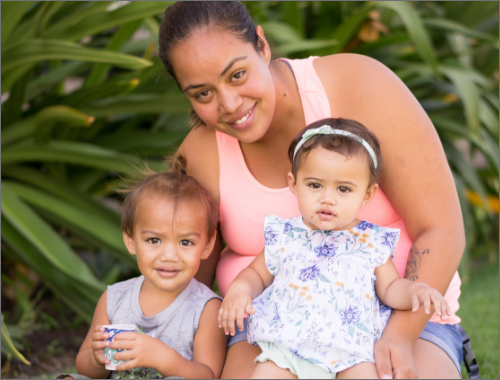
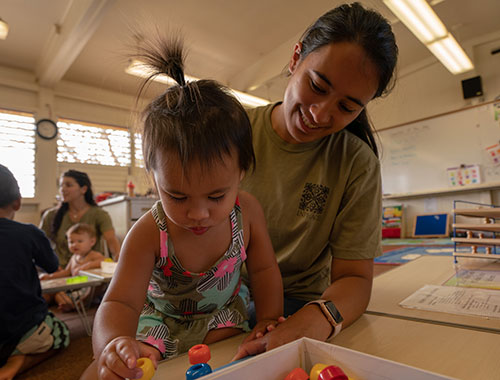
In Hauʻula, mother Tusiata Esera said she constantly searches for opportunities to take her 13-month-old daughter out in the community and meet other parents. But the local library and playgrounds don’t always have kids her daughters’ age, she said, and there are few child care programs close to home.
A family learning program, run by the nonprofit Keiki O Ka ʻĀina at the Hauʻula Civic Center, has been the perfect solution, allowing her to connect with other families and learn new activities to do at home with her daughter.
“She really likes school,” Esera said. “I think taking some of the things that we’re learning and doing them at home is a real gift.”
The program at the Hauʻula Civic Center is one of the dozens of sites at risk of closing after this school year as grants expire with no sources of replacement funding.
The vast majority of funding for family learning programs comes from the Native Hawaiian Education Program, which issues three-year grants to nonprofits providing these classes, Kanaiaupuni said. Partners in Development is currently in the final year of its grant cycle, meaning that funding will run out over the summer.
Roughly $20 million, or nearly half of the funding for the Native Hawaiian Education Program, goes toward early learning initiatives, Kanaiaupuni said.
The federal grants make up 80% of funding for family learning programs under the Institute for Native Pacific Education and Culture, which operates a dozen sites serving 350 children and parents across the state, said chief executive officer Sanoe Marfil. If federal funding for the program is cut, she said, INPEACE would only be able to run a maximum of two sites.
While the House version of the federal budget includes $46 million for the Native Hawaiian Education Program, it’s still unclear when — or how — the funding will be appropriated to nonprofits. Congress must pass the spending package by Friday to avoid a partial government shutdown.
Even if Congress funds the Native Hawaiian Education Program, it’s possible the department could still delay the distribution of grants to nonprofits, U.S. Rep. Jill Tokuda said. Adding to the ongoing uncertainty, the Department of Education announced late last year that it planned to move the administration of the Native Hawaiian Education Program to the Department of the Interior, which has historically managed natural resources and cultural heritage issues.
To read the original article, visit Early Learning Sites Could Close Soon In Hawaiʻi Amid Federal Funding Chaos – Honolulu Civil Beat